
7th Aug 2026
How to Choose 6x6 Deck Post Caps That Last
A deck can have quality boards, sturdy railings, and a well-planned layout, yet still look unfinished when the post tops are left exposed. The right 6x6 deck post caps solve that problem while protecting one of the most vulnerable parts of the structure: the end grain at the top of each wood post.
Exposed end grain absorbs water faster than the sides of a post. Rain, morning dew, snow, and repeated temperature changes can work moisture into the wood fibers, creating the conditions that lead to checking, splitting, discoloration, and rot. A properly fitted post cap helps shed water away from that surface and gives the deck a finished architectural detail that holds up season after season.
Choosing one is not only about finding a style you like. Fit, material, profile, and installation method all affect the final result. For homeowners, getting these details right means less maintenance and a cleaner-looking outdoor space. For contractors, it means consistent specifications and a more polished handoff on every project.
Start With the Actual Post Measurement
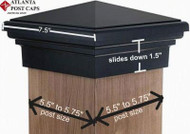
The most common mistake when ordering post caps is assuming the label on a lumber post tells you its exact finished size. A post sold as 6x6 is generally a nominal measurement. Standard dressed lumber often measures about 5 1/2 inches by 5 1/2 inches, not a full 6 inches by 6 inches.
Before selecting a cap, measure the top of the installed post from outside edge to outside edge. Check more than one post if the deck uses lumber from different batches or if posts have been weathered, sanded, wrapped, or trimmed. A cap needs enough interior clearance to sit fully over the post without forcing it into place.
A cap that is too tight can crack during installation or sit unevenly. One that is excessively loose may shift, collect debris at the edge, or look out of proportion. When a product is designed for a standard 6x6 post, confirm its listed inside dimension rather than relying on the product category name alone.
Account for Post Wraps and Trim
Many finished decks use composite, PVC, or wood wraps around structural posts. In that case, measure the completed outside dimension of the wrap, not the original wood post beneath it. A wrapped post may require a larger cap than a standard 6x6 deck post cap.
The same rule applies when a post has a decorative skirt, crown trim, or built-up molding near the top. Make sure the cap will clear the highest point of the finished assembly and still rest flat where it is intended to sit.
Choose a Cap Profile That Fits the Deck Design
Post caps are small details, but repetition makes them highly visible. On a deck with eight, 12, or 20 railing posts, the cap profile becomes part of the overall design language. The best choice usually complements the home and railing style rather than competing with it.
A pyramid cap is a dependable choice for traditional wood decks, privacy screens, and backyard fences. Its angled top encourages water runoff and gives each post a familiar finished shape. It works especially well with cedar, treated pine, and stained lumber where a classic look is the goal.
Flat-top and slim-profile caps create a cleaner, more contemporary line. They are often a strong fit for modern railings, horizontal fence designs, and decks with black metal balusters or composite boards. Their lower silhouette can make a row of posts feel intentional without adding visual bulk.
Ball-finial caps bring more ornament to the project. They work well on prominent corner posts, gates, pergolas, and entry areas where the deck design calls for a traditional focal point. On a large deck, some homeowners use finials only at stair landings or perimeter corners and use simpler caps elsewhere. That approach can add character without making every railing post feel overly decorative.
Match the Material to the Conditions
Material affects both appearance and the amount of care a post cap will require over time. The right answer depends on local weather, the deck’s exposure, and whether you want the cap to blend in or provide contrast.
Low-Maintenance Polymer Caps
High-quality polymer caps are a practical option for homeowners who want color stability and weather resistance without adding another item to the maintenance list. They do not require routine painting or staining, and they can provide a crisp, uniform look across every post.
This makes them particularly useful on busy family decks, pool areas, rental properties, and large fence-and-deck projects where consistency matters. A well-made molded cap should handle normal outdoor conditions while maintaining its shape and finish.
Aluminum and Metal Caps
Aluminum and metal caps give a deck a sharper architectural edge. Dark metal caps pair naturally with black railings, bronze fixtures, and contemporary exterior palettes. Aluminum is also a strong choice for wet climates because it will not rot like wood.
The trade-off is visual temperature and coordination. A metal cap can look distinctly modern against a rustic cedar deck, which may be exactly what you want or completely out of place. Match the finish to nearby hardware, railing components, exterior lighting, and door hardware for a deliberate result.
Wood Caps
Wood caps can provide a natural, custom appearance, especially when they are made from the same species as the deck or fence. However, wood requires ongoing sealing, staining, or painting to stay protected. If long-term low maintenance is the priority, a weather-resistant manufactured cap is often the better value.
Why 6x6 Deck Post Caps Protect More Than Appearance
The top of a deck post is exposed to direct weather every day. Water that sits on end grain does not simply affect the visible surface. Over time, moisture can travel downward through the post, particularly if coatings have worn away or cracks have developed.
A cap acts as a small roof for the post. Sloped designs direct water away, while an overhang helps keep runoff from tracking down the sides. This does not replace sound construction practices, proper drainage, or regular deck inspections. It does reduce unnecessary exposure at a location where wood is naturally susceptible.
Protection matters most on posts that receive full sun and rain, posts near sprinklers, and railing sections beside pools or landscaping. It also matters on decks where replacing a post would require removing finished railing sections or disturbing a carefully built structure. Spending a little on protective finishing components can help preserve much larger parts of the project.
Install Caps for a Clean, Lasting Fit
Installation is straightforward, but a few careful steps make the difference between a cap that looks professionally finished and one that feels like an afterthought. Start by brushing away sawdust, loose fibers, and debris from the post top. If the wood is wet from rain or freshly treated, allow it to dry according to the material manufacturer’s guidance before installation.
Test-fit each cap before fastening. It should sit level and fully seated without rocking. If the top of a post is badly split, cupped, or cut unevenly, correct that issue first. A cap cannot compensate for a severely uneven surface.
Use the fastening method recommended for the cap material. Depending on the product, that may be exterior-rated screws, adhesive, or a combination of both. Exterior fasteners should resist corrosion, especially on decks exposed to moisture and treated lumber. Avoid driving fasteners so tightly that the cap distorts or cracks.
For a professional-looking installation, align caps consistently. On square caps, make sure each one faces the same direction. On a deck with a long railing run, step back occasionally to check the visual line. Small alignment differences are more noticeable once every cap is installed.
Buy for the Whole Project, Not One Post at a Time
Post caps are most effective when they create a consistent finish across the deck. Count every visible post, including stair posts, gate posts, landing corners, privacy walls, and attached pergola supports. Then order a few extras when practical. Having matching replacements on hand can be useful if a cap is damaged during construction or if the deck is expanded later.
For contractors, standardizing on a reliable cap style can simplify estimating and project planning. For homeowners, buying the complete set at once helps avoid slight color or finish differences from separate production runs. Atlanta Post Caps has built its product selection around common post sizes so customers can start with fit, then select the design and material that best suits the job.
A deck post cap is a small investment, but it finishes the work where people see it most. Choose a correctly sized cap with a profile that suits the structure, install it carefully, and let every post do its part in protecting the deck and making the space feel complete.